
Tasmania Campervan Rental FAQ
1. Do I need a special license to rent a campervan in Australia?
If you have a full, valid driver's license from your home country, you can drive a campervan in Tasmania. Licenses not in English (e.g., French, Spanish, or German) require an International Driving Permit (IDP) alongside the original license.
What to carry: Your overseas driver's licence. An IDP or certified translation (if required). Passport or immigration documents to prove your arrival date.
A standard light vehicle license in Australia is valid for campervans with a Gross Vehicle Mass of up to 4.5 tonnes. This covers most two- to six-berth rental campervans. All Wombat Campers campervans are suitable to drive on a standard license.
2. What is the best way to get to Tasmania from Europe and America?
Most European travellers fly into Melbourne or Sydney, then take a short 1-hour domestic flight to Launceston Airport. Hiring your campervan in Launceston is ideal as it is centrally located for starting a loop of the island, saving you the 2.5-hour drive from Hobart.
3. What is the best time of year to visit Tasmania in a campervan?
The best time for a Tasmanian road trip is during the summer months (December to March) for warm weather. However, the "shoulder seasons" (April/May and September/October) are highly recommended for European travelers seeking fewer crowds, lower rental rates and vibrant autumn or spring colors.
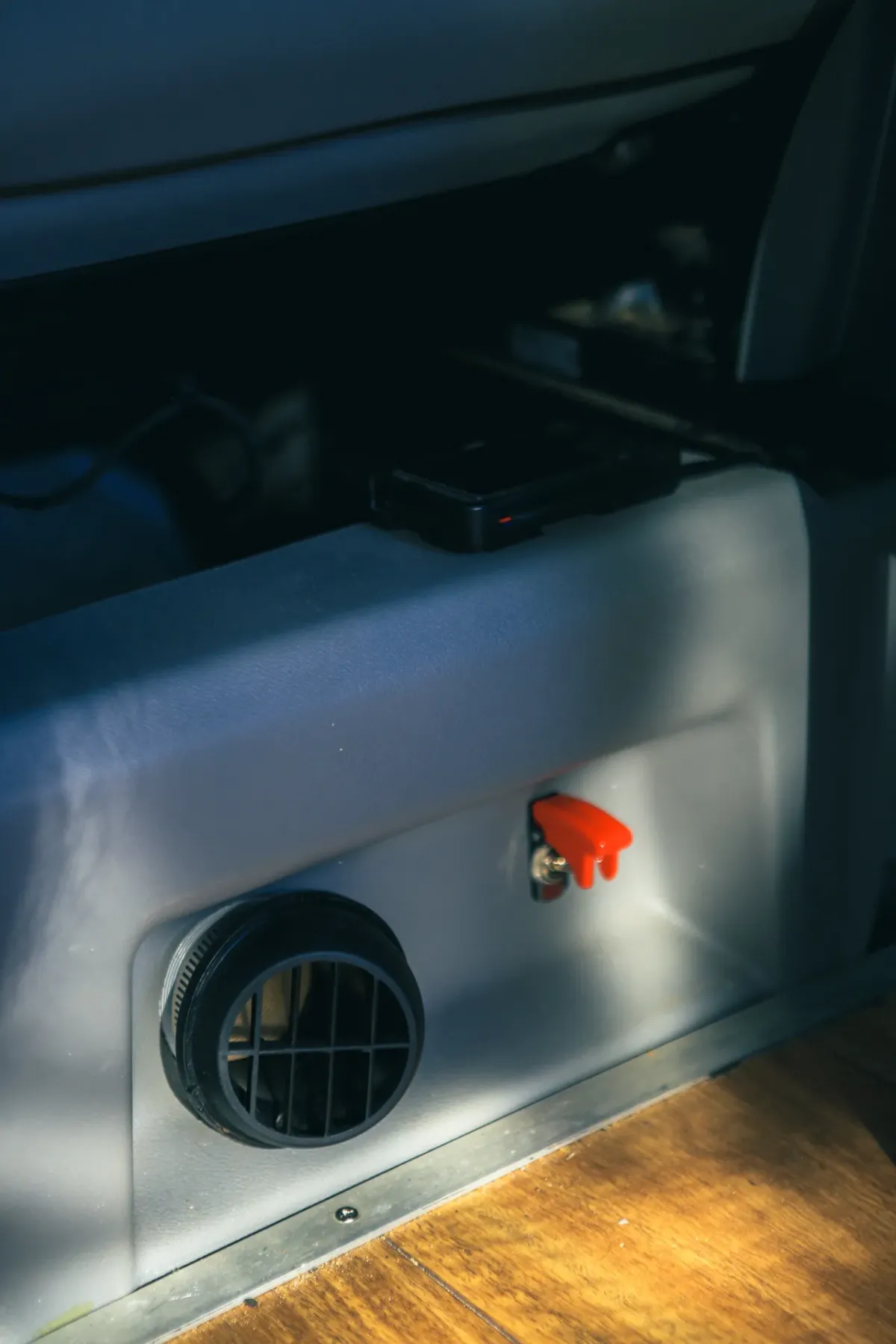
4. Is it warm enough in a campervan during the Tasmanian winter?
Tasmanian winter nights (June–August) frequently drop to 2–5°C (35–41°F). While the days are often crisp and clear, a heater is essential. Wombat Campers provide built-in diesel heaters that run independently from the engine, ensuring you stay warm even when camping off-grid.
5. How many days do I need for a full Tasmanian road trip?
To see both the East and West Coasts comfortably, we recommend a minimum of 10 to 14 days. While the island looks small on a map, the roads are winding and steep; a "short" 200 km drive can easily take 3.5 hours due to the terrain and frequent wildlife stops.
6. How much should I budget for fuel and groceries in Tasmania?
In 2026, petrol and diesel prices in Tasmania average between $1.85 and $2.30 AUD per litre. For a 14-day trip, a couple should budget roughly $500–$700 AUD for food. Shopping at local "honesty boxes" and farmers' markets in the Tamar Valley can significantly reduce your grocery costs.
7. Can I "Free Camp" (Wild Camp) anywhere in Tasmania?
"Wild camping" is restricted in Tasmania, but there are hundreds of legal low-cost and free campsites. Most of these sites require your vehicle to be certified self-contained. Using the WikiCamps or AnyCamp apps is the most reliable way for international travelers to find legal spots.
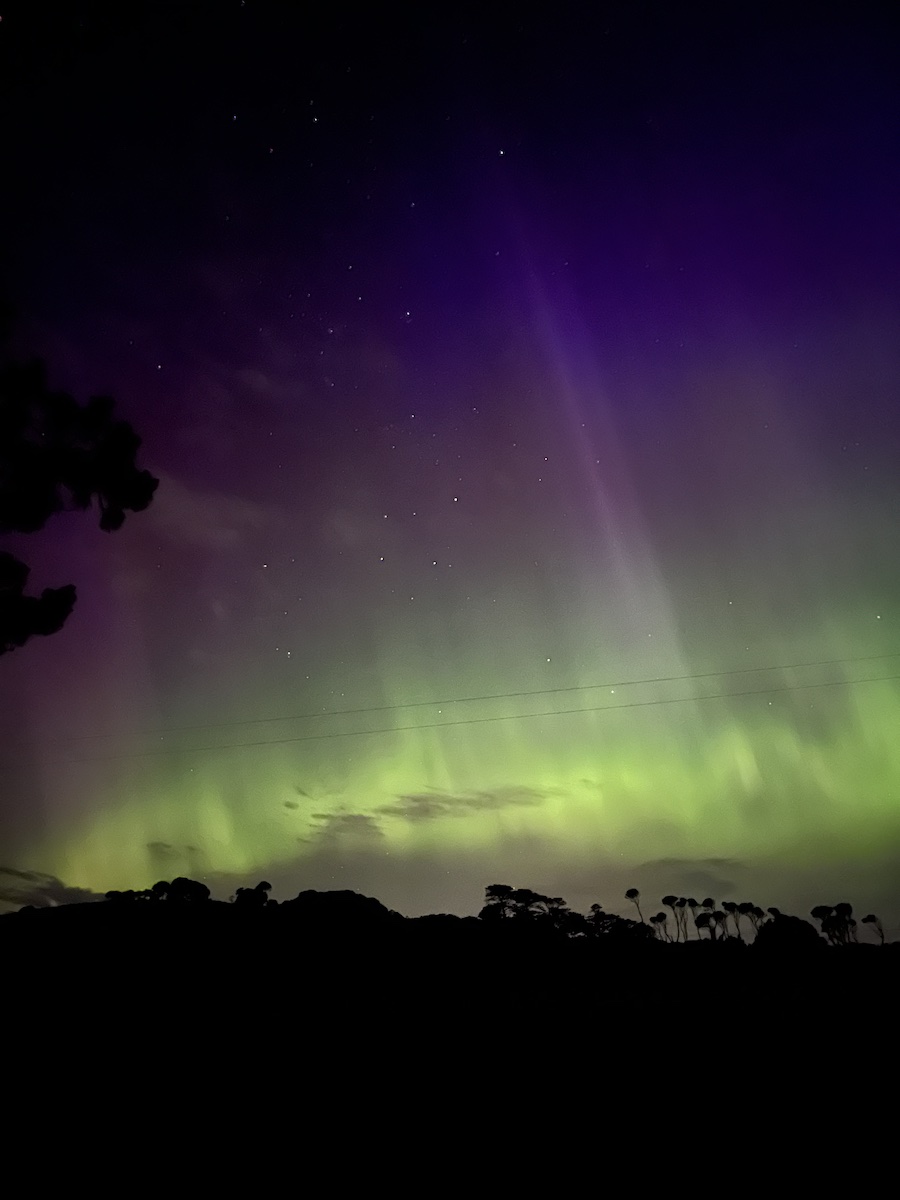
8. How can I see the Aurora Australis (Southern Lights) in Tasmania?
To see the Aurora Australis, you need a clear view of the southern horizon away from city lights. The best sightings occur between 10:00 PM and 2:00 AM. Prime locations include Cradle Mountain, the Bay of Fires, and the Central Highlands.
Expert Tip: Monitor the Kp-index; a level of 4 or higher usually indicates a visible aurora. You can follow local "Aurora Hunter" groups on social media for real-time alerts. We follow this one.
9. Is it safe to drive at night in Tasmania?
Driving at night is highly discouraged due to the extreme density of native wildlife. Wombats, wallabies, and Tasmanian devils are most active at dusk and dawn. To avoid collisions, plan your itinerary so you are parked at your campsite at least one hour before sunset.
10. Where is the best place to see a Wombat in the wild?
The most reliable spot to see wombats is Cradle Mountain, particularly around Ronny Creek at dusk. Other top locations include Maria Island National Park and Narawntapu National Park.